
Wizards posted the Star Trek collecting article this afternoon, and the entire document contains one published pull rate. It belongs to the stardates cards. The seven signed headliners, the cards every Trek fan I know is actually going to chase, get a population count and nothing else. Roughly 250 of each, and not one word about how many packs stand between you and a signature.

A Star Trek Magic set is the kind of thing I was always going to buy, so that bias goes on the table before I touch any math. I went straight to the pull rates today just as I do with every set, and that gap up there is what I found.
I don’t think Wizards is hiding the ball, exactly. You can’t quote odds on a fixed-population insert without noting the print run size. Wizards has never shared that number for any relevant set. The math boils down to educated guessing, with each guess clearly labeled. I prefer discussing this out loud rather than pretending we know the odds.
The set lands November 13, prerelease the week before. Let’s take the number they gave us first, then the ones they didn’t.
The one number they gave us
From the product breakdown: 1 in 25 Play Boosters swaps a common for a stardates card. There are 30 different ones. Non-foils turn up in Play Boosters and Collector Boosters; traditional foils are Collector Booster only.
A 4% per-pack rate across a 30-pack box averages 1.2 stardates cards per box. The distribution is where it gets uncomfortable.

About three in ten Play Booster boxes have no stardates cards. That is how a 4% rate behaves across 30 packs. If you pull nothing, your luck was ordinary; getting zero is the second most likely outcome.
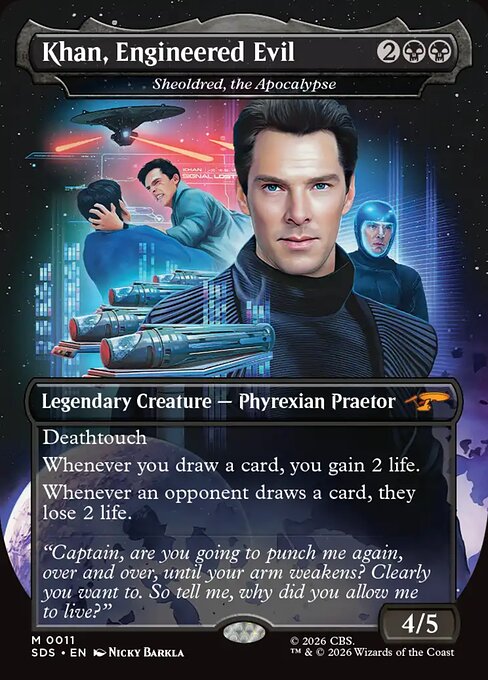
Now the harder question. What if you want one exact stardates card? Say the Sheoldred reprint Wizards previewed as “Khan, Engineered Evil.”
If all 30 are equally likely, that card is 1 in 750 Play Boosters. One per 25 boxes. At $6.99 MSRP, you expect to spend $5,242 in packs to see it once.

About 17 boxes buys a coin-flip shot. About 58 gets you to 90% likely. Treat “expected” as a midpoint: half the people chasing that card will spend more than $5,242.
That equal-weighting assumption is doing a lot of work, and Wizards did not confirm it. If the stardates sheet takes the original card’s rarity into account, then a Sheoldred ranks below the pack rate and slot-level rarity roll. Any number above this is too optimistic. Treat 1 in 750 as the limit on your luck.
Collecting all 30
This is a coupon collector problem, and those are always worse than people expect. Expected packs to complete the set from Play Boosters alone:
| Boxes opened | Packs | Expected unique stardates |
|---|---|---|
| 5 | 150 | 5.4 of 30 |
| 10 | 300 | 9.9 of 30 |
| 25 | 750 | 19.0 of 30 |
| 50 | 1,500 | 25.9 of 30 |
| 100 | 3,000 | 29.5 of 30 |
Full completion runs about 2,996 packs on expectation. That’s 100 Play Booster boxes, about $20,900 at MSRP. The last five cards cost more than the first twenty-five combined, which is the harmonic series doing what it does to every completionist.
Buy the singles.
The numbers they don’t share with us
Seven signed headliners, at approximately 250 copies each. About 1,750 signed cards on the planet, and they can only surface in Collector Boosters.
Sit with that for a second, because Magic has never done this. Thirty years of cards, and this is the first time the thing in the pack is somebody’s actual signature instead of a printed one. It also wrecks the math. There is no sale history to price against here and no prior signed set to lean on for sell-through. We are all about to guess at the value of a category that did not exist last week.
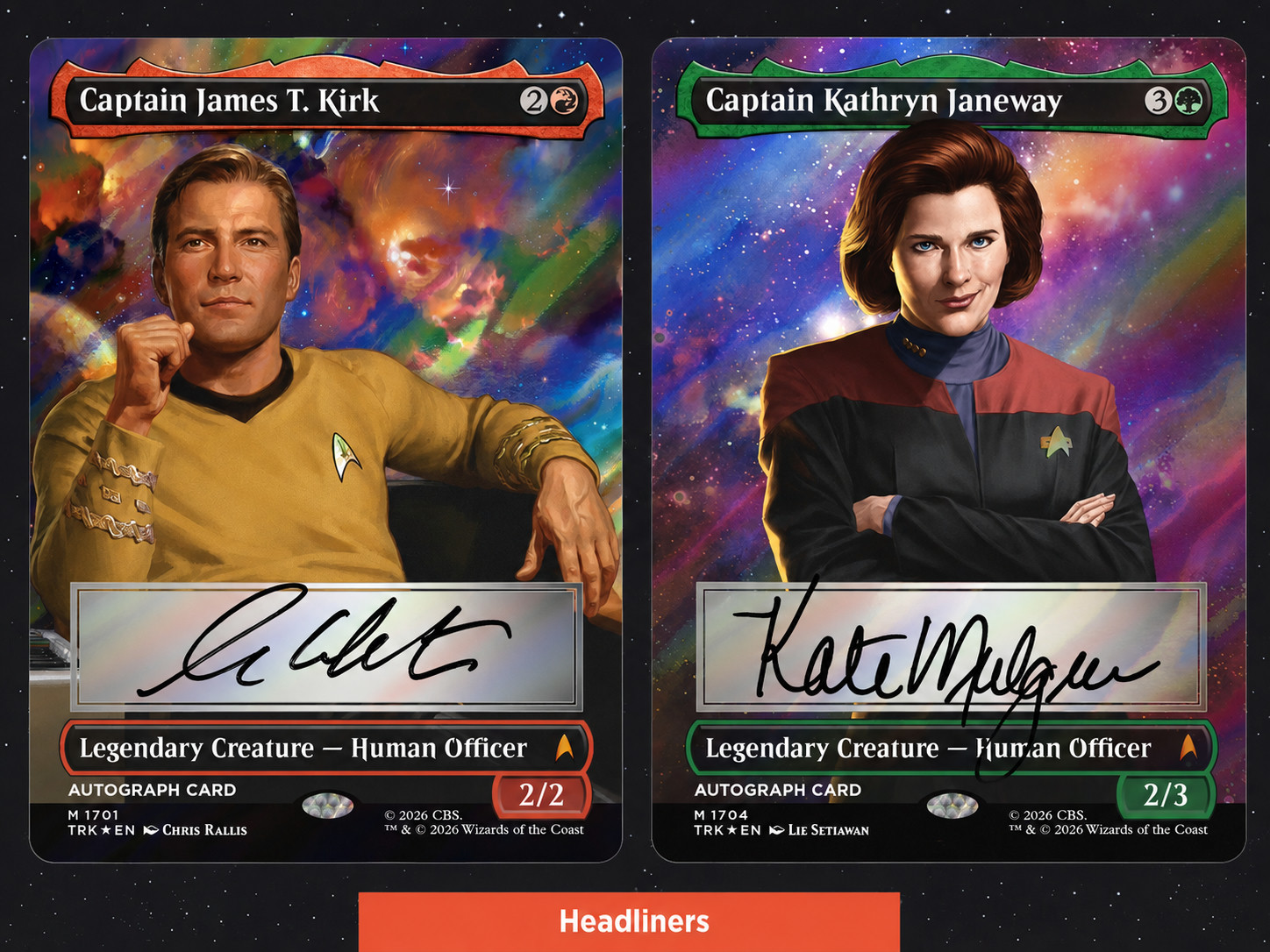
Read the wording carefully, because it matters. Signed cards can appear in Collector Boosters of any language, but the card itself is always English. So the denominator is the global Collector Booster print run rather than the English one. Every Japanese, German, and Simplified Chinese Collector Booster is a lottery ticket in the same pool.
That is the opposite of how Wizards handled the LTR 1-of-1 One Ring, which lived only in English Collector Boosters. Which brings us to the only real anchor anyone has.
The LTR floor
Wizards published the serialized 1-of-1 One Ring at less than 0.00003% per Collector Booster. One copy existed. Invert it: 1 in 3,333,333. So Lord of the Rings had at least 3.33 million English-language Collector Boosters in circulation in 2023.
That is the only quantitative window anyone has ever had into a Magic print run, and it is strictly a floor.
Three years on, the picture is bigger. Hasbro’s CEO noted that Final Fantasy made $200 million on its first day. In comparison, Lord of the Rings took six months to hit that number. He also mentioned that Wizards increased production by about four times before the product shipped. Star Trek is a flagship Universes Beyond release built on a 60th anniversary, landing in a year Wizards has packed with licensed sets.
So I do not know the Star Trek Collector Booster print run. Nobody outside Renton does. But a global run below 3 million packs would be smaller than a three-year-old set’s English-only run, which I do not believe for a second. Everything from 3 million up is live.
Here is everything that estimate rests on. We used the published odds from a serialized ring shipped in 2023, two lines from a Hasbro earnings call, and a sense that everything has gotten bigger. That is the entire sourcing behind a reverse-engineered print run for a set that isn’t even out yet. Somewhere, a Romulan senator is holding the result up to the light.
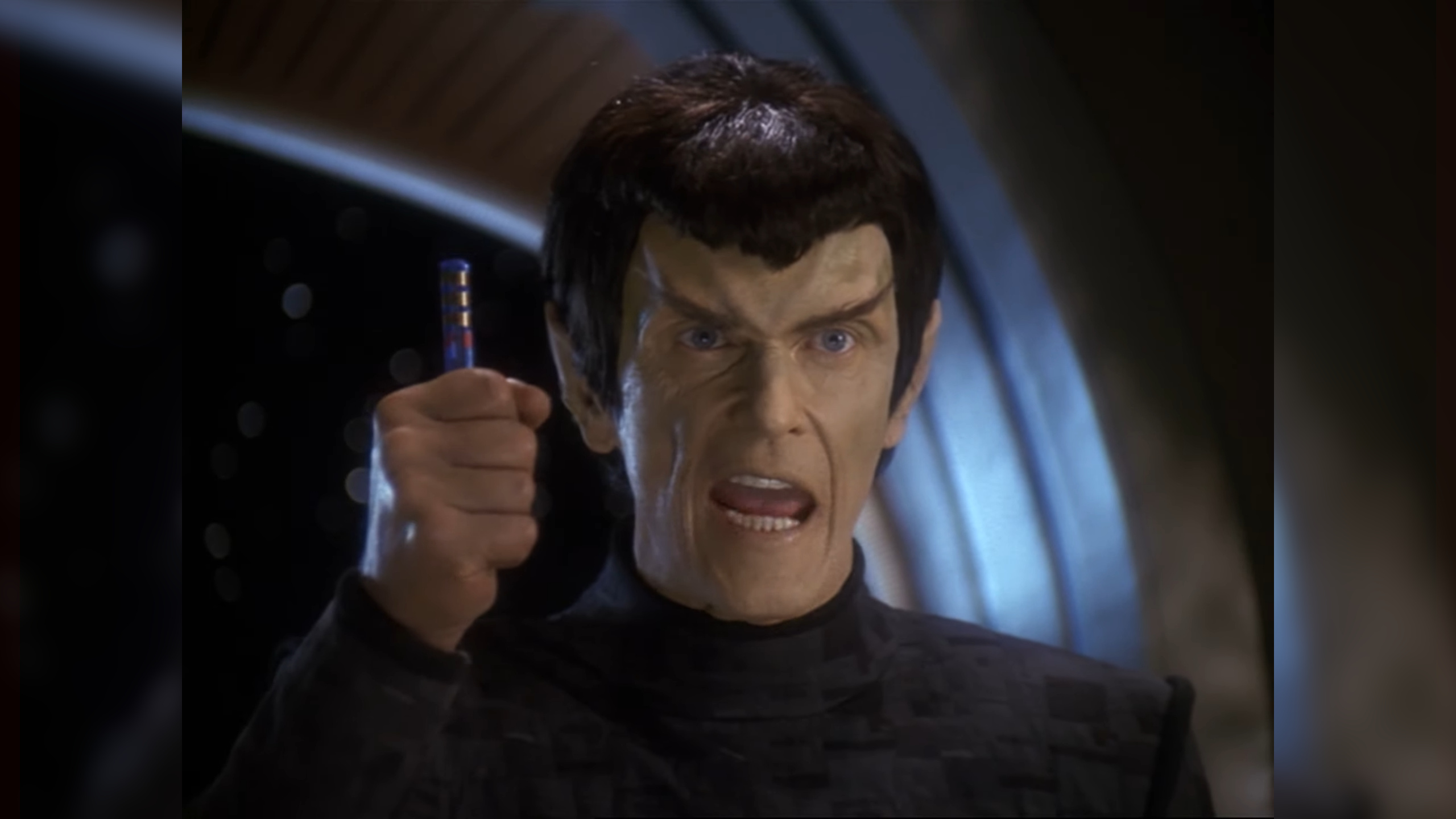
He has a point. It is a guess wearing the costume of a number. I’m okay with that. The other option is to fake confidence about odds nobody can know. So, I’ll keep saying “guess” out loud while I do it.
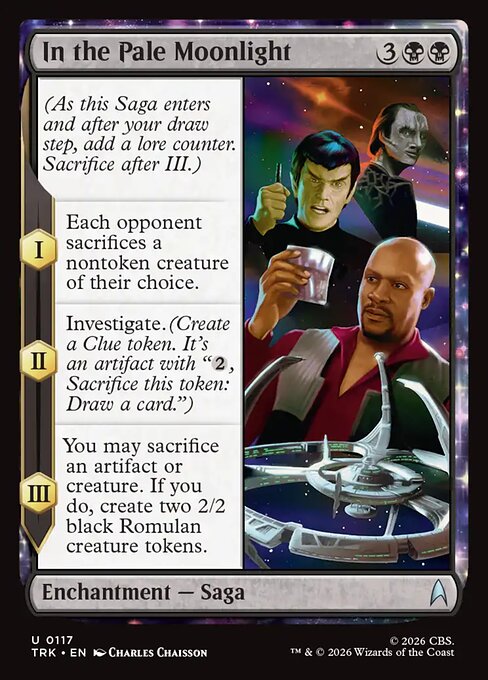
I’ll take the small mercy this set offers. One card is named In the Pale Moonlight, after the Deep Space Nine episode where Vreenak delivers his line. If Wizards is going to make me build a print run out of scraps and vibes, the least the universe can do is name a card after the bit. So: skepticism duly noted, here is that range as boxes per signed card.

At a 3 million global run, a signed card shows up about once every 143 Collector Booster boxes. At 5 million, once every 238. At 10 million, once every 476. The answer swings by a factor of three across print runs that are all completely defensible, and that is the honest state of public knowledge.
Per box, if you prefer it that way: somewhere between a 0.7% and a 0.2% chance a sealed Collector Booster box holds a signature.
And if you are chasing one captain
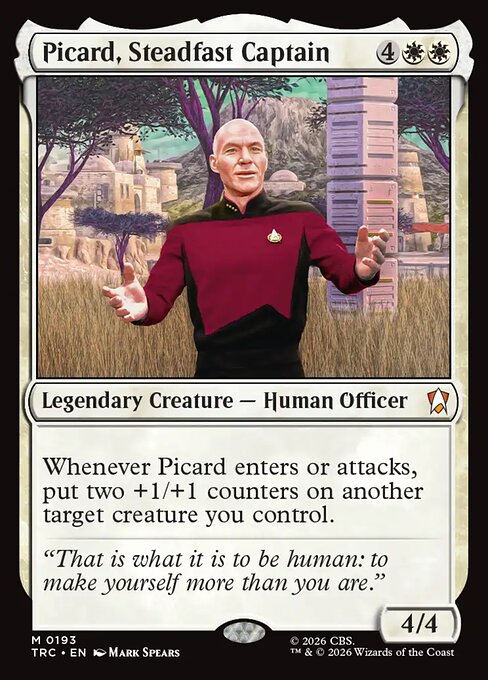
Each signature is its own ~250-copy population, so chasing a single actor is seven times harder than chasing “any signed card.” Want the Janeway, or nobody but Kirk? You just multiplied your problem by seven and kept all the same bad denominators.

At a 5 million run, a single actor’s signature is 1 in 20,000 Collector Boosters, and you would expect to spend about $760,000 at MSRP to open it. At 10 million, it is 1 in 40,000 and $1.5 million.
This is the part that gets misread, so read it slowly. That $760,000 is what the packs cost, and the packs are full of other cards that carry most of that value back out. Nobody opens $760,000 of product to chase an autograph. What the number shows is scarcity: one actor’s entire supply of signatures would fit in a shoebox. The market price will be set by demand against however many of the 250 ever get listed, and opening EV has no say in it.
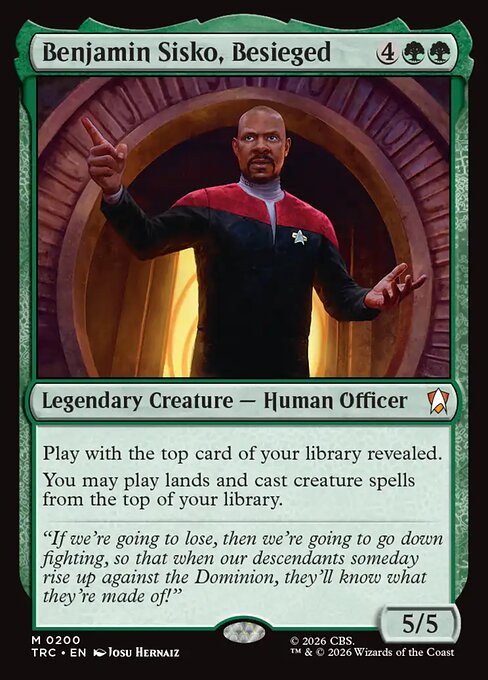
For scale: Murders at Karlov Manor did seven serialized guild leaders, 250 copies each. Same shape, 1,750 cards. But those were serialized, and a serial number is printed. A signature is a finite thing a person sat down and physically did 250 times, and that is a different kind of ceiling. I think they behave differently, and I think the signed Kirk is the single most interesting object Wizards has printed since the One Ring.
Beyond Calculations
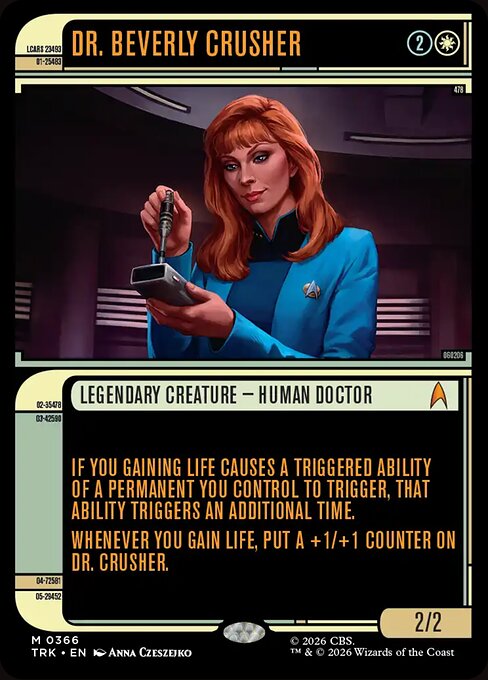
Each Collector Booster contains two rare or mythic Booster Fun cards. It also includes one foil rare or mythic Booster Fun card. The pool is huge: 29 LCARS frame cards, 10 LCARS shock lands, 24 classic Enterprise cards, and 25 scene cards. Add the 12 scene cards that start in the two Scene Boxes and reappear as non-foils in Collector Boosters, plus 30 stardates cards in traditional foil.
Wizards published no slot weightings for any of it. Surge foil LCARS and surge foil classic Enterprise are Collector Booster exclusives, and if this set follows LTR, surge foils will be the genuinely thin part of the print. I cannot give you a number, and anyone who does right now is making it up.
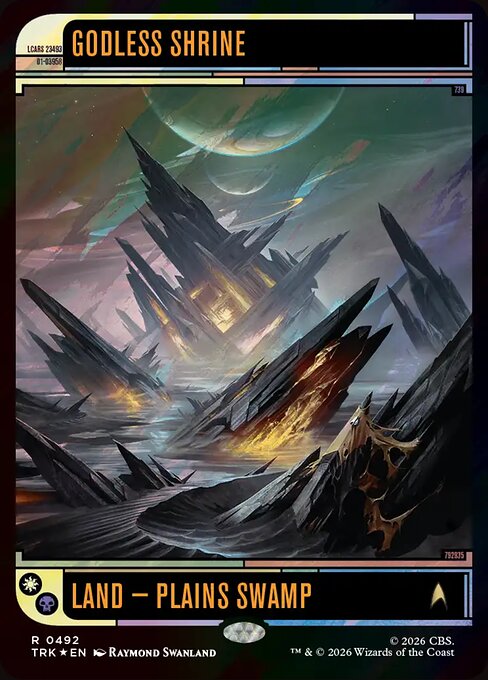
The one I would watch: all ten shock lands are in this set, in LCARS frames, in a Standard-legal Universes Beyond release. That is a lot of Commander demand pointed at a treatment nobody has odds for. If the price ever runs, it runs on players who could never have seen the pull rate coming, because there was never one to see.
The product-level math, which is solid ground
MSRP arithmetic, no assumptions required:
- A Play Booster box is 30 packs at $6.99, which is $209.70 of packs.
- A Collector Booster box is 12 packs at $37.99, which is $455.88 of packs.
- The Beam Me Up Bundle is $99.99 for 8 Play Boosters plus 1 Collector Booster. Those boosters are $93.91 at MSRP, so you are paying $6.08 for two foil Spacecraft schematic promos, 30 basic lands, and the box.
- The Scene Box is $41.99 for 3 Play Boosters ($20.97 of packs) plus 6 traditional foil scene cards, 6 art cards, and an easel. The other $21.02 buys the scene cards.
That Beam Me Up premium is small enough to be interesting, and it hides a trap. If you were thinking of Beam Me Up Bundles as your signed-card vehicle because they include a Collector Booster, stop. You are paying $99.99 per Collector Booster instead of $37.99. That is 2.6 times the cost per lottery ticket, and the eight Play Boosters cannot contain signed cards at all. Buy Collector Boosters.
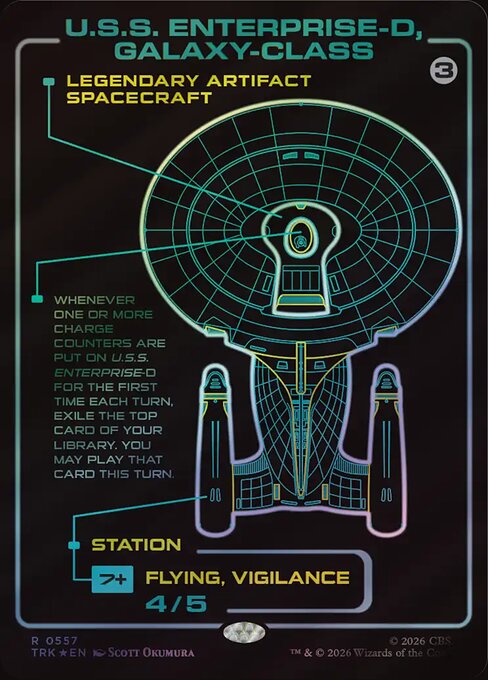
One thing I waved past, though. Those “two foil promos” deserve a closer look. There are eight of them, each a Star Trek Spacecraft drawn up as a ship schematic, and Wizards never says they turn up anywhere but the bundle. So the $6.08 you are “overpaying” is really the cover charge for a second coupon collector problem. You get a random two of eight per bundle with no pity timer, and you buy bundles until the duplicates stop. The verdict stands. But if you are in it for the ships instead of the signatures, know which chase you signed up for.
What I actually think
The stardates rate is generous by modern standards. One in 25 packs, 4%, non-foils in Play Boosters, 30 recognizable reprints in Star Trek clothing. That is a bonus sheet built to be opened rather than hoarded, and I expect the non-foils to be cheap by January. The foils are Collector Booster only, which is a different question, and I have no odds for them.
The signed cards will get treated as though the odds are known. Someone will quote them as a per-box percentage on YouTube within a week, and that percentage will be a print run guess wearing a lab coat. When you see one, ask what denominator it assumed. If it does not say, it is marketing.
The honest summary of the seven signatures is short. About 1,750 exist. They are in the global Collector Booster pool. The odds hinge entirely on a number Wizards will never publish, and the defensible range for that number moves the answer by 3x. Everything else is preference.
Individual card images via Scryfall. Autograph card previews are screen captures.
The assumptions, stated plainly. All 30 stardates cards are assumed equally likely within their slot; Wizards did not confirm this, and rarity weighting would make single-card chases worse. Signed-card insertion is assumed uniform across the global Collector Booster pool; if it varies by region or language, individual odds change. The print run figures are scenarios rather than estimates, and every signed-card number scales linearly with them. Wizards said “approximately 250 copies,” so 1,750 is itself approximate. MSRP is used throughout for consistency and is not the price you will pay. Product configurations and MSRPs come from the official Wizards collecting article; the LTR 3.33 million figure is derived from Wizards’ own published odds for the serialized One Ring.
Every number up there is a guess with its work shown, which means some of them are wrong. If you have a better denominator for that print run than a Hasbro earnings call and a three-year-old Ring, or you just want to pick a fight over the equal-weighting assumption, email me at analyst@mtgsold.com. I would rather be corrected than left confident.
I am watching this set closely through the November 13 release. Quoted signed-card odds, a firmer print run, the non-foil stardates settling to a price: I will write down each development as it arrives. The free newsletter below is where those updates land, so subscribe if you would rather they come to you than check back.